Reading Comprehension · Level 7 · المستوى 7
Why Museums Must Tell Stories
لماذا يجب أن تروي المتاحف القصص
Read the text
اقرأ النصThere was a time when a museum was essentially a warehouse with good lighting. Objects sat behind glass, each accompanied by a small card stating its name, date and material. Visitors walked quietly from case to case, and those who already knew the history left satisfied. Everyone else left tired.
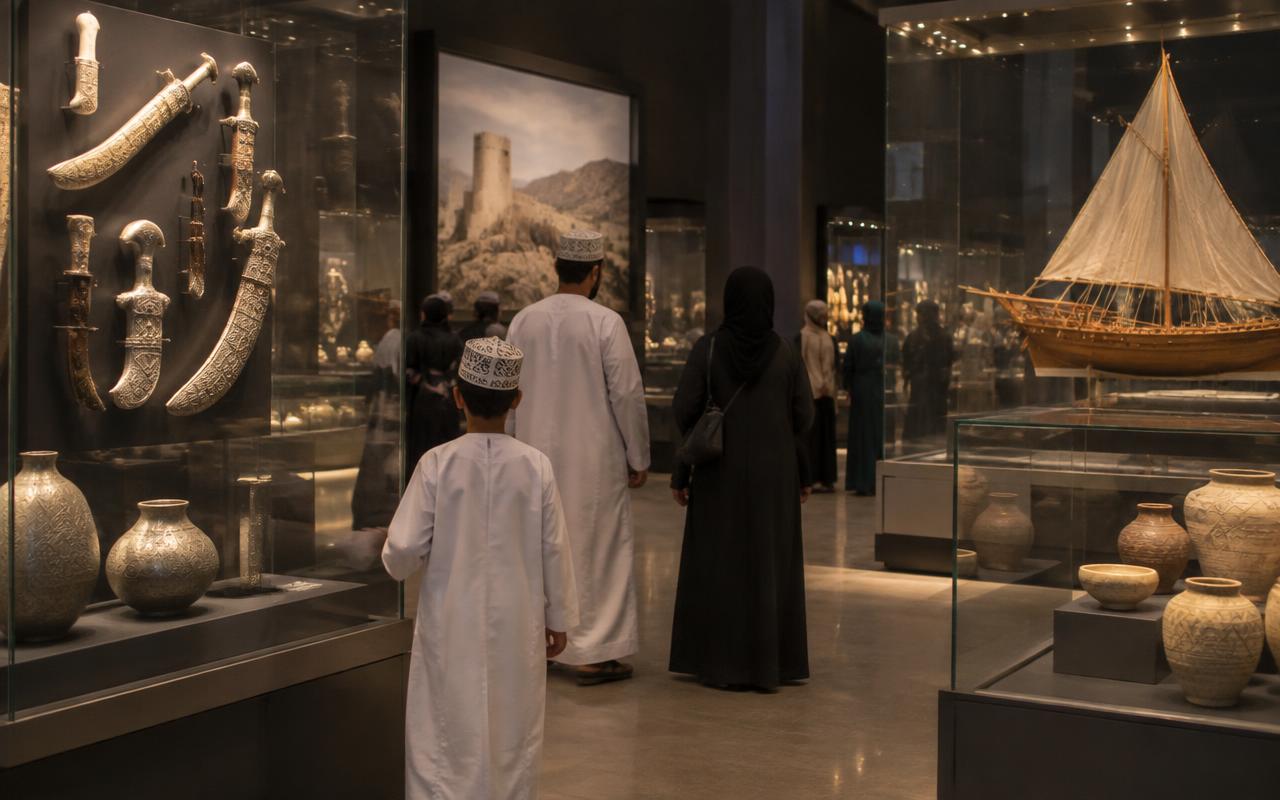
The best modern museums have rejected this model. When Oman's National Museum opened in Muscat in 2016, its designers chose to organise many galleries around themes and journeys rather than simple timelines. A visitor might follow the story of maritime trade from a stitched wooden boat to navigational instruments and letters written by merchants in distant ports. The objects are the same kind of objects; what has changed is the question they are being used to answer.
Critics sometimes argue that storytelling risks simplifying history. A single narrative, they say, can hide disagreement and uncertainty, turning the past into a neat tale with heroes and villains. This concern is fair. A museum is not a film, and its responsibility is to the evidence.
Yet the alternative is not neutrality; it is silence. A dagger labelled only 'khanjar, silver, 19th century' tells a visitor almost nothing about who wore it, what it meant, or why it was decorated with such care. Good storytelling does not replace evidence; it gives evidence a context. The challenge for curators is to tell stories that invite questions rather than close them.
For young Omanis especially, this matters. A museum that connects the objects of the past to familiar places and questions of identity can turn a school trip into the beginning of a lifelong curiosity. That, surely, is what a national museum is for.
Answer the questions
أجب عن الأسئلة1. What is the writer's main opinion?
2. How does the National Museum organise many galleries?
3. What do critics fear about storytelling?
4. 'a warehouse with good lighting' — the writer uses this image to criticise museums that…
5. 'the alternative is not neutrality; it is silence' means…
6. 'invite questions rather than close them' means stories should…
Inference · استنتاج
7. Connect paragraphs 1 and 4: what is wrong with the khanjar label?
Inference · استنتاج
8. How does the writer treat the critics' view?
Select the evidence · اختر الدليل
9. Which sentence shows the writer partly agrees with critics?
Select the evidence · اختر الدليل
10. Which sentence best states the writer's balanced position?
11. What is the purpose of the final paragraph?
Short answer · إجابة قصيرة
12. In the old model, who 'left satisfied'?
Summary · التلخيص
13. Best summary?
Practice freely — nothing is saved.تدرّب بحرية، لا يتم حفظ أي إجابة أو نتيجة.
Next: Level 7 · Crafts in a Machine Age →